Two Zodiacs, One Sky
Most people meet astrology through the Western (tropical) zodiac. Vedic astrology uses the sidereal zodiac, and the two have drifted apart. Here's the difference.
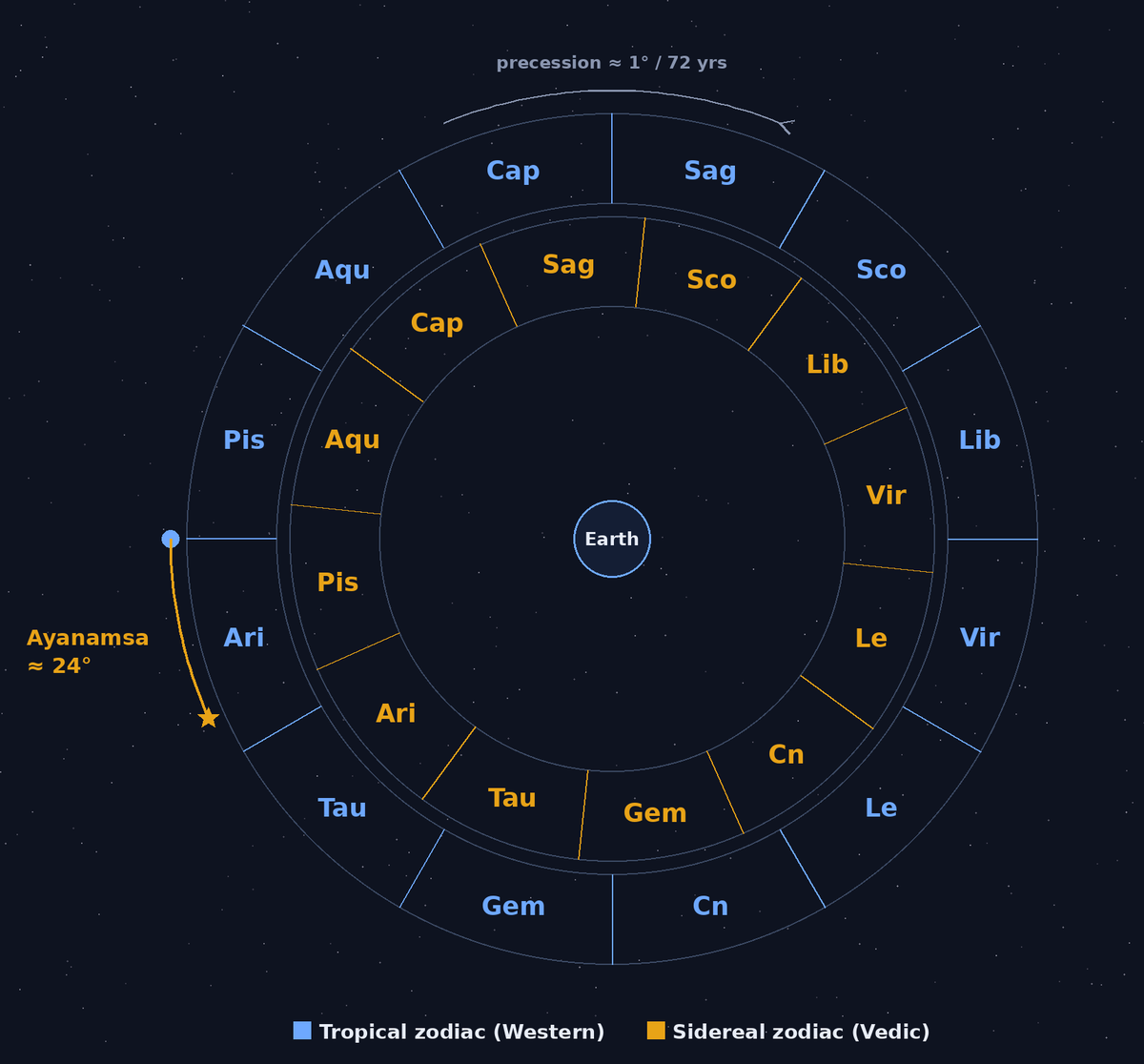
Tropical / Western
Anchored to the seasons. 0° Aries is fixed to the spring equinox, so it maps Earth's tilt and the Sun, not the stars behind the Sun.
Sidereal / Vedic (Jyotiṣa)
Anchored to the fixed stars. 0° Aries stays aligned with the real constellations, set by an ayanāṁśa (Lahiri is standard). This is the framework of Vedic astrology.
The Drift
Earth wobbles like a spinning top (precession), moving the equinox about 1° every 72 years. Over roughly 1,700 years the two zodiacs have drifted about 24° apart.
The Takeaway
Because the sidereal zodiac sits about 24° behind, most Western placements fall in the previous sign in Vedic. The first ~24° of a Western sign shift back a sign; only the last ~6° stay the same, so an early or mid Taurus is an Aries in Jyotiṣa, while a late Taurus stays Taurus.